SOs: The Nature of an Existential Reality
SHA AAH — Society Will Figure It Out.
Love does not ask society for permission to exist. Yet society has spent generations deciding how it should be expressed.
What is a Significant Other? A husband or wife? A life partner? Someone with whom we share a home, a journey, or a part of our lives? Must love fit one recognised arrangement before we accept it as real?
Love may find expression through marriage, a live-in relationship, companionship, or a bond that two individuals choose to recognise. These relationships are not identical in their promises, responsibilities or consequences. But does that mean that people whose choices differ deserve less dignity or respect?
A question from one man’s side
Let us begin with an observation from a man’s point of view. We see people who regard marriage as a sacred, enduring commitment. We also see relationships outside marriage, where two adults choose companionship without following the same formal path. Feelings may arise, deepen, change or fade. Why do we so readily recognise love expressed through marriage, while asking other relationships to justify their very existence?
And what do women think? How many place the enduring commitment of marriage above every passing feeling? How many believe that love can be sincere outside marriage too? What does commitment mean to them? These are not answers to presume. They are voices to invite. A conversation about love remains incomplete if we speak for women instead of listening to them.
When an experience becomes a category
Human beings experienced affection, longing and companionship long before modern states and legal documents. Yet societies have repeatedly developed rules to organise relationships and define their accepted forms.
Ancient Indian Dharmaśāstra literature describes eight forms of marriage: Brāhma, Daiva, Ārṣa, Prājāpatya, Āsura, Gāndharva, Rākṣasa and Paiśācha. These are classifications of marriage, not eight forms of love. They describe different conditions and social arrangements: some involve family or ritual arrangements, Gāndharva recognises union through mutual attraction, while others involve exchange or coercion. Their approval and treatment vary across texts.
The classification invites a question: when an intimate human experience is brought under the categories of social order, does the category begin to define the limits of the experience? Did love emerge from the institution, or did institutions emerge as one way of organising relationships that already existed?
A civilisation with many voices
Consider Khajuraho. Its temples contain religious, secular, domestic and other sculptural themes, including images of couples in union. They cannot be reduced to erotic imagery alone; nor do they support the claim that Indian civilisation has always spoken with one uniform voice about the body, desire and intimacy. They do, however, invite us to look again at the complexity of our cultural record.
Then consider the Gopīs of Braj. In devotional traditions, their longing for Krishna is often understood as an expression of bhakti that moves beyond ordinary social boundaries. These are sacred narratives and theological expressions, not straightforward historical records of relationships. Yet they show how deeply love and longing have entered our spiritual imagination.
Kāma, Śiva and the mystery of desire
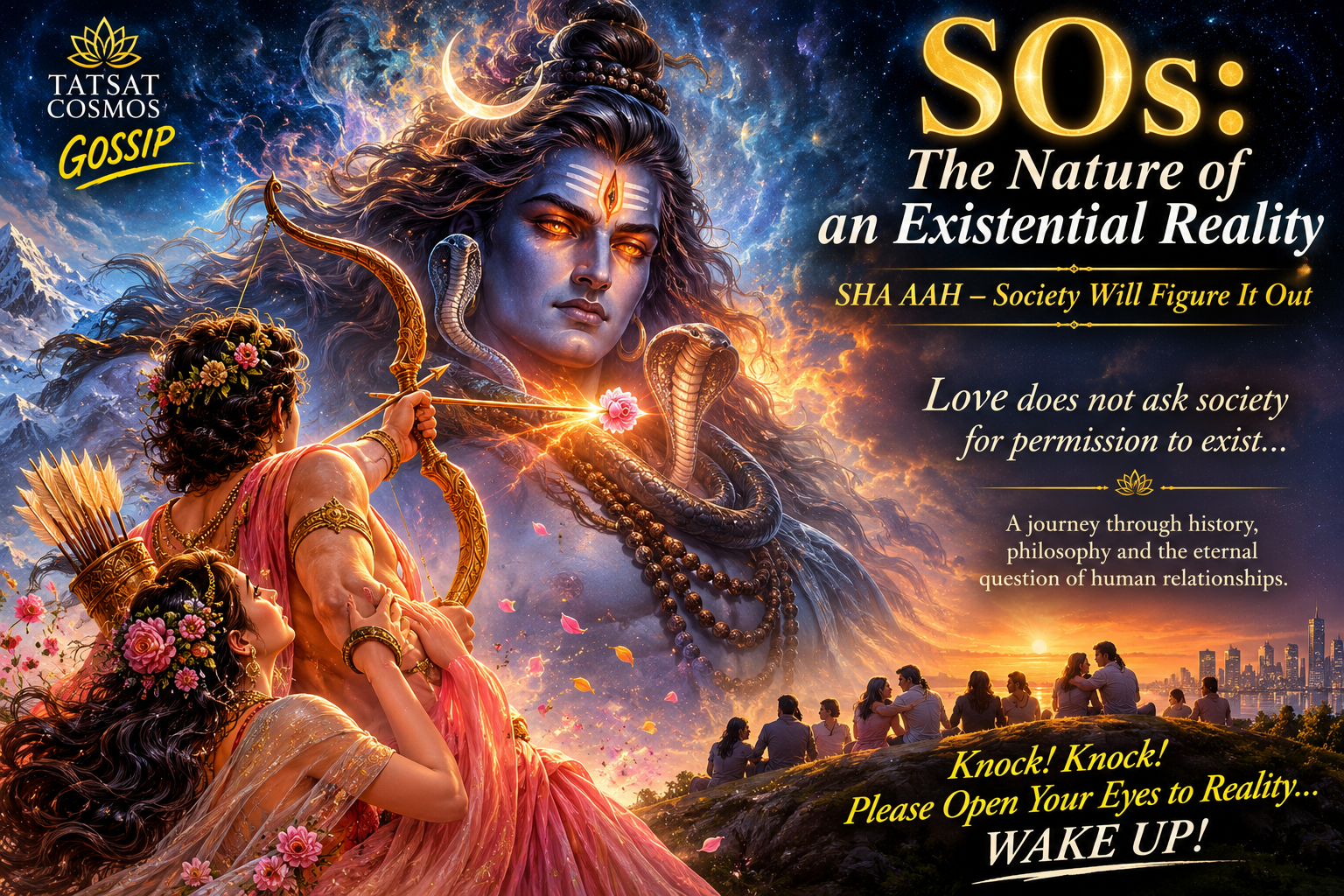
In the familiar mythological account, Kāma aims his flower-arrow at Śiva, who is absorbed in meditation. Śiva’s third eye opens, and Kāma is consumed by its fire. The story has many layers and interpretations. It is not a historical biography; it is a narrative through which generations have contemplated desire, restraint and consciousness.
For a moment, let us look beyond the familiar images and ask: what is desire? What is restraint? Does suppressing an emotion make it disappear, or does it change the way it finds expression? Even our sacred narratives have carried these difficult questions across time. Why should our conversations about human relationships be afraid of them?
Protection, order and personal freedom
Law has a legitimate role in protecting rights and addressing responsibilities. Marriage law, for example, can deal with property, inheritance, maintenance, children and separation. But protecting people’s rights is not the same as claiming authority over the private emotional substance of their relationships.
In India, ordinary public affection is not automatically a criminal offence. Section 296 of the Bharatiya Nyaya Sanhita concerns obscene acts in public places, or obscene words or songs, when its legal conditions are met; it is not a blanket ban on every expression of affection. The distinction matters.
The Supreme Court’s 2018 decision in Joseph Shine v. Union of India struck down the criminal adultery provision as unconstitutional. The judgment addressed equality, dignity and personal autonomy. Adultery is no longer a criminal offence under that provision, though it may still have consequences in matrimonial proceedings. The law itself, then, reflects an ongoing debate about where public authority should end and personal choice begin.
The reality that refuses to disappear
Emotional isolation, fear of judgement and the inability to communicate honestly can affect well-being. That is a serious human concern. It does not require us to claim, without evidence, that suppressed love directly causes particular diseases or that medicine depends upon emotional repression. The question is already important enough: what happens to individuals when their honest feelings are repeatedly treated as shameful or unacceptable?
A lifelong marriage, a live-in partnership and a brief attachment are not interchangeable. They may carry very different commitments. But recognising those differences need not mean denying the humanity of the people who choose them. The choice of adults deserves respect; their rights and responsibilities deserve protection; and the reach of social and legal authority deserves thoughtful examination.
So let us ask, rather than presume. What do women think? What do men think? What does commitment mean to those who marry, and to those who choose another form of companionship? Let the conversation begin with listening.
Tik-Tok. Tik-Tok. Tik-Tok.
Generations have passed. Social arrangements have changed. Laws have changed. Relationships have changed. Yet the human need for affection, companionship and connection remains. The existential reality does not disappear simply because an institution cannot fully contain it.
Knock! Knock! Please open your eyes to reality. You have already slept for generations.
WAKE UP!
SHA AAH — Society Will Figure It Out.
P.S. — A thought from the author: consent, commitment and the law
Here is a further question I wish to place before legal thinkers and readers. If a married man wishes to enter another intimate relationship, should there be a formal requirement that he first obtain the free, informed and written consent of his wife? Should she be the person who records whether she agrees, the circumstances in which she agrees, and the limits of that agreement? Could such a record make honesty and accountability within marriage more meaningful?
This is the author’s personal proposal for discussion, not a description of existing Indian law or legal advice. It is deliberately framed as a question for debate. A rule imposed only on men would raise serious constitutional questions about equality, privacy and the autonomy of every adult involved. In Joseph Shine, the Supreme Court rejected the earlier adultery law in part because its gendered structure treated women unequally and compromised personal autonomy. Any future legal proposal would therefore need careful examination by constitutional and family-law experts, including whether the same principles should apply equally regardless of gender.
The intention behind raising this thought is not to claim ownership over another person’s feelings. It is to ask whether commitment, honesty and the informed consent of a spouse deserve a more serious place in conversations about relationships—and how law might protect people without taking away their dignity or agency.