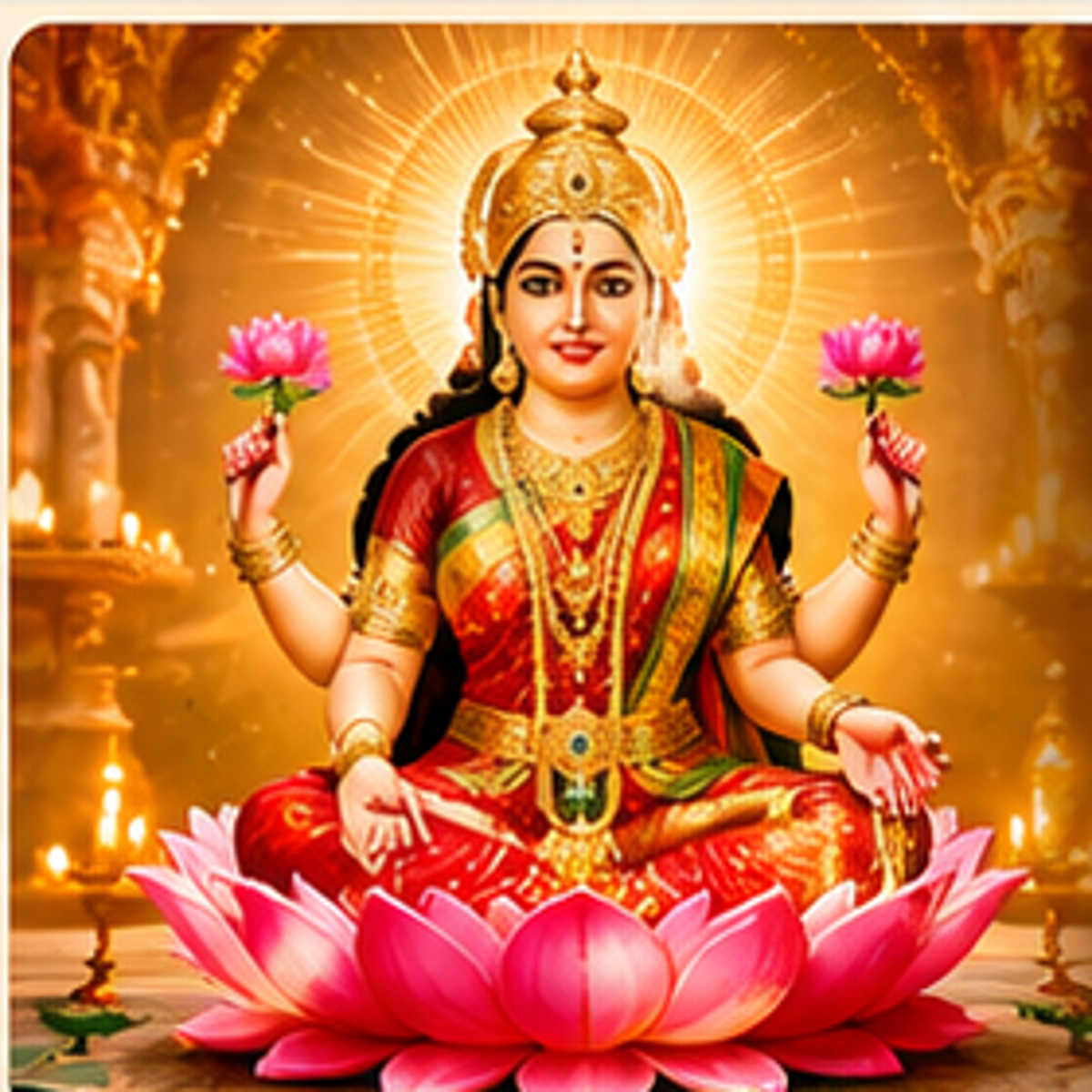
Deepawali: The Great Churning of Samudra, the Emergence of Maa Mahalakshmi and the Awakening of Inner Light
An exploration of Kartik, cosmic time, the cooperation of Devas and Asuras, the subtle-body symbolism of Iḍā and Piṅgalā, and the deeper meaning of prosperity as a year-long Sādhana.
Tatsat Cosmos | GOSSIP
1. Kartik: A month of light, devotion and inner awakening
In the Hindu spiritual calendar, the month of Kartik holds a special place. It is associated with devotion, sacred bathing, lighting of lamps, worship of Lord Vishnu, the observance of Devutthana Ekadashi, Deepawali, and the celebrated Dev Deepawali of Kashi.
Across different regions and traditions, Kartik is observed through various forms of worship and spiritual discipline. The lighting of lamps, in particular, is not merely a decorative custom. It can be understood as an expression of the aspiration to bring light into the darkness of our surroundings and our own consciousness.
But a question deserves deeper examination:
Is there a connection between Kartik, Deepawali and the emergence of Maa Mahalakshmi from the Samudra Manthan?
The connection is spiritually compelling. However, we must distinguish between a scriptural chronology and a devotional interpretation.
The Purāṇic account of Samudra Manthan places the event in a particular Manvantara. It does not provide a Kartik lunar date. The association between Lakshmi, the lighting of lamps and Kartik is therefore best understood as a devotional and symbolic connection, rather than proof that the cosmic churning historically occurred during this month.
2. Samudra Manthan: What does the scripture actually tell us?
The Śrīmad Bhāgavata Mahāpurāṇa, in its Eighth Skandha, describes Samudra Manthan during the reign of the sixth Manu, Cākṣuṣa.
Bhāgavata Purāṇa 8.5.7 identifies Cākṣuṣa as the sixth Manu. The following verses describe Lord Viṣṇu’s manifestation as Ajita during this Manvantara and the churning of the Ocean of Milk.
Bhāgavata Purāṇa 8.5.10 says:
पयोधिं येन निर्मथ्य सुराणां साधिता सुधा ।
भ्रममाणोऽम्भसि धृतः कूर्मरूपेण मन्दरः ॥
The verse describes the churning of the ocean to obtain nectar for the Devas, with Lord Viṣṇu supporting Mount Mandara in His Kurma, or tortoise, form.
Here, an important distinction must be made.
A Manvantara is a vast cosmic period, not a month in the Hindu lunar calendar. The fact that Samudra Manthan is described in the sixth Manvantara does not establish that it happened in Kartik. The Purāṇic passage does not give a specific lunar month or tithi for the event.
This distinction does not diminish the spiritual significance of Kartik. Instead, it allows us to appreciate the relationship between the two without confusing cosmic chronology with the ritual calendar.
3. Why did the Devas and Asuras come together?
One of the most remarkable dimensions of Samudra Manthan is the cooperation between the Devas and the Asuras.
They were not natural friends. They were rivals, often engaged in conflict. Yet, when the Devas lost their strength and prosperity, they sought the guidance of Lord Viṣṇu.
The Devas and Asuras were instructed to work together to churn the Ocean of Milk and obtain Amṛta, the nectar of immortality.
Mount Mandara became the churning rod, and the serpent king Vāsuki became the rope. Lord Viṣṇu assumed the form of Kurma to support the mountain when it began to sink.
This episode offers a profound reflection.
Even opposing forces may have to participate in a common undertaking when the objective is greater than their immediate rivalry. Cooperation does not necessarily mean that differences have disappeared. It means that a greater purpose can temporarily bring opposing forces into a shared effort.
This is also a lesson for human society: progress often requires cooperation among people who do not share the same interests, temperaments or beliefs.
4. What emerged from the great churning?
The manifestations from Samudra Manthan are popularly remembered as the fourteen Ratnas, or divine treasures.
However, different Purāṇic accounts do not always give an identical list or sequence. The following is a familiar traditional synthesis, while the Bhāgavata Purāṇa narrates the manifestations across its own sequence of chapters.
| Manifestation | Commonly understood significance |
|---|---|
| Hālāhala poison | The danger and destructive consequences hidden within great undertakings |
| Surabhi | Nourishment and abundance |
| Uccaiḥśravā | Divine splendour and vitality |
| Airāvata | Royal power and majesty |
| Kaustubha | Divine radiance and preciousness |
| Pārijāta | Beauty and fulfilment |
| Apsarās | Grace and refinement |
| Goddess Lakshmi | Prosperity, auspiciousness and abundance |
| Vāruṇī | A divine intoxicating essence |
| Dhanvantari | Healing and Ayurveda |
| Amṛta | Nectar of immortality |
Other traditional enumerations include the Moon, a divine umbrella, earrings and other treasures. The number and grouping can vary according to the text and tradition.
The deeper point is that the churning did not produce only one kind of treasure. It brought forth danger, beauty, nourishment, healing, power and finally the nectar sought by the participants.
The ocean became a symbol of hidden potential, and the churning became a symbol of the effort required to bring that potential into manifestation.
5. Why did poison emerge before the treasures?
Before the desirable treasures appeared, the deadly Hālāhala poison emerged.
The poison threatened all existence. Lord Śiva accepted it and held it in His throat, earning the name Nīlakaṇṭha.
This episode deserves special attention.
The story does not suggest that every great undertaking begins with immediate prosperity. Sometimes, when hidden depths are disturbed, the first thing that emerges is what is toxic, neglected or destructive.
The poison must be recognised and contained before the gifts of the churning can be enjoyed.
In human life, too, inner transformation may bring suppressed anger, fear, jealousy, insecurity and unresolved tendencies to the surface. Spiritual practice requires the courage to recognise these forces rather than pretending they do not exist.
The symbolism of Lord Śiva reminds us that destructive tendencies must be contained through awareness, discipline and higher understanding.
6. The emergence of Maa Mahalakshmi: Why did She choose Lord Vishnu?
Among the most beautiful moments of Samudra Manthan is the appearance of Maa Lakshmi.
The Śrīmad Bhāgavata Mahāpurāṇa describes Her emergence in the Eighth Skandha, Chapter 8. She is welcomed with sacred ceremonies, hymns, offerings and divine ornaments.
But the most meaningful part of the episode is not simply Her appearance. It is Her choice.
Bhāgavata Purāṇa 8.8.23 states:
एवं विमृश्याव्यभिचारिसद्गुणैः
वरं निजैकाश्रयतागुणाश्रयम् ।
वव्रे वरं सर्वगुणैरपेक्षितं
रमा मुकुन्दं निरपेक्षमीप्सितम् ॥
In essence, after considering the enduring qualities of those assembled, Ramā chooses Mukunda, Lord Viṣṇu, who is self-sufficient and the abode of divine qualities.
This is an important distinction.
Lakshmi does not merely choose the side of the Devas because they are the Devas. Her choice is described in terms of the qualities of Lord Viṣṇu.
We may contemplate this as a profound spiritual principle:
Prosperity finds its highest meaning when it is connected with preservation, responsibility, balance and dharma.
Wealth without wisdom can become destructive. Power without restraint can become dangerous. Abundance without responsibility can lead to disorder.
Maa Mahalakshmi’s association with Lord Viṣṇu invites us to understand prosperity as something that must be sustained through balance and righteous conduct.
7. Maa Mahalakshmi and the subtle currents of Iḍā and Piṅgalā
There is another dimension of Mahalakshmi worship that deserves contemplation: the relationship between the Goddess and the subtle-body traditions of Yoga and Tantra.
In yogic understanding, the human subtle body is described through nāḍīs, or subtle channels. Among them, three are particularly important:
- Iḍā nāḍī — traditionally associated with the lunar principle, cooling qualities and receptivity.
- Piṅgalā nāḍī — traditionally associated with the solar principle, heat, activity and dynamism.
- Suṣumṇā nāḍī — the central channel associated with the deeper spiritual ascent of consciousness.
These are subtle-body concepts within yogic traditions, not ordinary anatomical structures.
The Haṭha Yoga Pradīpikā 3.110 gives a sacred symbolic identification:
इडा भगवती गङ्गा पिङ्गला यमुना नदी ।
इडा-पिङ्गलयोर् मध्ये बालरण्डा च कुण्डली ॥
This verse identifies Iḍā with the sacred Ganga and Piṅgalā with the Yamuna, while referring to Kundalini in the space between them.
The Śrī Sūktam, the celebrated Vedic hymn to Śrī, also gives us a way to contemplate nourishment, flourishing and auspicious abundance. In certain later esoteric interpretations of its concluding verses, the principles of Puṣṭi and Yaṣṭi are associated with the lunar and solar currents of the subtle body.
This is an interpretive Tantric-yogic reading; it should not be confused with a direct statement in the Vedic hymn that Mahalakshmi literally resides in Iḍā and Piṅgalā.
Nevertheless, it offers a meaningful contemplative approach to the Goddess.
Maa Mahalakshmi may be contemplated not only as the giver of external prosperity, but also as the principle of harmonious nourishment within the subtle being.
The lunar and solar currents represent complementary dimensions of life. When our inner energies are disturbed, we may experience imbalance, restlessness, exhaustion or a lack of direction. Yogic discipline seeks harmony between these currents and the awakening of the central path.
From this perspective, the grace of Mahalakshmi can be contemplated as the auspicious balance through which life becomes nourished, disciplined and spiritually fruitful.
True abundance is not merely having more. It is becoming balanced enough to use what we have wisely.
8. Why is Maa Lakshmi worshipped during Deepawali?
Deepawali falls on the Amavasya of the month of Kartik in the widely observed North Indian calendar tradition, although regional calendars and observances can differ.
Amavasya is the night of the new Moon, traditionally associated with darkness. The lighting of lamps on this night carries a powerful symbolic meaning.
A lamp does not fight darkness. It simply illuminates the space around it.
Similarly, the worship of Maa Lakshmi can be understood as an invitation to welcome auspiciousness, order, nourishment and well-being into our homes and lives.
The Skanda Purāṇa’s Kartik traditions give special importance to the offering of lamps during this sacred month. Such practices help explain the devotional relationship between Kartik, lamps and the worship of Lakshmi.
But this association should not be mistaken for proof that the Samudra Manthan itself occurred on Kartik Amavasya.
The deeper connection is one of spiritual remembrance: the Goddess who emerged from the cosmic ocean is honoured through the lighting of lamps and the cultivation of auspiciousness.
9. Lord Rama’s return to Ayodhya and the triumph of light
Deepawali is also widely celebrated as the occasion of Lord Rama’s return to Ayodhya after fourteen years of exile and the defeat of Rāvaṇa.
The people of Ayodhya are traditionally remembered as welcoming Rama, Sita and Lakshmana with rows of lamps.
The Vālmīki Rāmāyaṇa narrates Rama’s return and coronation. However, the familiar association of that return with Kartik Amavasya and the lighting of rows of lamps belongs to the later and widely cherished Deepawali tradition; the epic does not explicitly establish the familiar festival date in the way it is observed today.
The story nevertheless gives Deepawali one of its most enduring meanings: the return of dharma, the restoration of rightful order and the triumph of good over evil.
The external celebration becomes a reminder of an internal responsibility.
We must also work towards the victory of truth over falsehood, discipline over disorder, compassion over cruelty and awareness over ignorance.
10. Lakshmi, Kali and the diverse traditions of Deepawali
Deepawali is not observed in exactly the same manner throughout India.
In many regions, Maa Lakshmi is worshipped on the Amavasya night. In Bengal and several eastern traditions, the same night is especially associated with Kali Puja, honouring Maa Kali.
The Goddess traditions are diverse. The Devī Māhātmya, for example, celebrates the divine feminine through the manifestations of Mahākālī, Mahālakṣmī and Mahāsarasvatī.
It would be inaccurate to say that all Tantric traditions replace Lakshmi with Kali, or that every region follows one uniform form of worship.
Instead, these traditions reveal different dimensions of the Divine Mother: protection, transformation, prosperity, wisdom and the power to overcome destructive forces.
The worship of Kali and Lakshmi can therefore be understood as distinct yet complementary expressions of the sacred feminine in different devotional settings.
11. Why are Lakshmi and Ganesha worshipped together?
A familiar Deepawali practice is the worship of Maa Lakshmi along with Lord Ganesha.
The symbolism is meaningful.
Maa Lakshmi represents prosperity and auspicious abundance, while Lord Ganesha is worshipped as the remover of obstacles and the lord of beginnings.
The message is that prosperity should be accompanied by wisdom, discernment and the ability to overcome obstacles.
Riddhi and Siddhi are traditionally associated with Lord Ganesha and represent accomplishment, prosperity and spiritual or intellectual fulfilment in different traditions.
The precise arrangement of Lakshmi, Ganesha, Riddhi and Siddhi is not identical in every scriptural or regional tradition. Nevertheless, their association in contemporary worship conveys an important principle:
Prosperity without wisdom may become a burden; accomplishment without humility may become an obstacle of its own.
12. Deepawali should not end with one night: The invitation to year-long Sādhana
Perhaps the greatest opportunity of Deepawali is to transform a festival into a continuing spiritual discipline.
Lighting a lamp for one night is beautiful. But what happens to the light within us after the festival is over?
Do we continue to cultivate clarity in our thoughts, honesty in our actions, compassion in our relationships and discipline in our daily lives?
The Bhagavad Gītā offers a powerful foundation for this inner journey.
Bhagavad Gītā 6.5 states:
उद्धरेदात्मनात्मानं नात्मानमवसादयेत् ।
आत्मैव ह्यात्मनो बन्धुरात्मैव रिपुरात्मनः ॥
Meaning: One should uplift oneself and not degrade oneself. The mind can become one’s own friend, and it can also become one’s own enemy.
This verse reminds us that the real work of transformation cannot be outsourced. Rituals, festivals, sacred places and spiritual teachings can inspire us, but daily discipline is what gradually changes our lives.
A year-long Sādhana may include:
- Daily remembrance of the Divine and sincere prayer.
- Regular meditation and self-observation.
- Responsible use of wealth and resources.
- Cultivation of truthfulness, compassion and self-restraint.
- Study of sacred texts and reflection on their deeper meanings.
- Service to others and gratitude for what life provides.
- A disciplined approach to physical, mental and spiritual well-being.
The purpose is not to turn spirituality into another competition or a display of religious identity.
It is to make our lives more conscious.
The true worship of Mahalakshmi is not limited to asking for wealth. It is also about becoming worthy of abundance, using it responsibly and allowing it to benefit others.
13. The deeper message of Samudra Manthan
The great churning of the ocean can be contemplated at several levels.
At the cosmic level, it is a divine Purāṇic narrative involving Devas, Asuras and the intervention of Lord Viṣṇu.
At the social level, it teaches that cooperation can emerge even among opposing forces when a greater purpose demands it.
At the psychological level, it reminds us that inner transformation may first bring hidden difficulties and destructive tendencies to the surface.
At the spiritual level, it invites us to seek the nectar of higher understanding rather than remaining occupied only with temporary rewards.
And through the symbolism of Maa Mahalakshmi, it reminds us that prosperity reaches its highest expression when it is joined with balance, preservation, wisdom and dharma.
The ocean is vast. Its treasures remain hidden until the effort of churning begins.
Likewise, the human being carries immense potential, but that potential must be awakened through sincere effort, discipline and grace.
This Deepawali, let us not merely light lamps outside our homes.
Let us also begin the work of illuminating our inner world.
May Maa Mahalakshmi bless us with not only wealth, but also wisdom, balance, nourishment, harmony and the strength to live a life guided by dharma.
Tatsat Cosmos | GOSSIP
Deepawali is an invitation—not merely to celebrate prosperity, but to understand its deeper meaning and cultivate it through Sādhana.
For deeper understanding and enquiries, connect with us on WhatsApp:
+91-8400955079
Or look forward to our upcoming deeper research and explorations at:
Let the lamp we light today become the awareness we carry throughout the year.
Scriptural references and research notes
- Śrīmad Bhāgavata Mahāpurāṇa, Skandha 8, Chapters 5–9 — Cākṣuṣa Manvantara, the churning of the Ocean of Milk, Kurma, Hālāhala, the emergence of Lakshmi and Amṛta.
- Śrīmad Bhāgavata Mahāpurāṇa 8.5.7–10 — the sixth Manu and the churning during the Cākṣuṣa Manvantara.
- Śrīmad Bhāgavata Mahāpurāṇa 8.8.19–25 — Lakshmi’s examination of the assembled beings and Her choice of Lord Mukunda.
- Śrī Sūktam — Vedic hymn to Śrī Mahalakshmi; its esoteric interpretations should be distinguished from the literal wording of the hymn.
- Haṭha Yoga Pradīpikā 3.110 — the symbolic identification of Iḍā with Ganga and Piṅgalā with Yamuna.
- Bhagavad Gītā 6.5 — self-upliftment and the mind as friend or enemy.
- Vālmīki Rāmāyaṇa, Yuddha Kāṇḍa — Rama’s return and coronation.
- Devī Māhātmya — the divine manifestations of Mahākālī, Mahālakṣmī and Mahāsarasvatī.
- Skanda Purāṇa and Padma Purāṇa, Kartik Māhātmya traditions — the devotional significance of Kartik, sacred bathing and lamp offerings.
Research note: The Kartik association with Lakshmi and lamps is presented here as a devotional and symbolic relationship. The Manvantara reference does not establish a Kartik date for Samudra Manthan. Likewise, the Iḍā–Piṅgalā connection is presented as an esoteric interpretive framework, not as a direct quotation declaring that Lakshmi resides in those nāḍīs.


A truly beautiful article! ✨ It reminds us of the deeper roots of our Dharma and encourages us to seek the light within. तमसो मा ज्योतिर्गमय। 🪔🙏