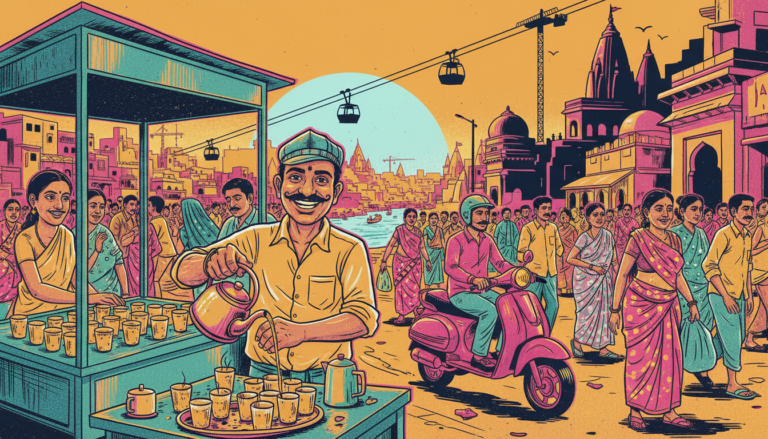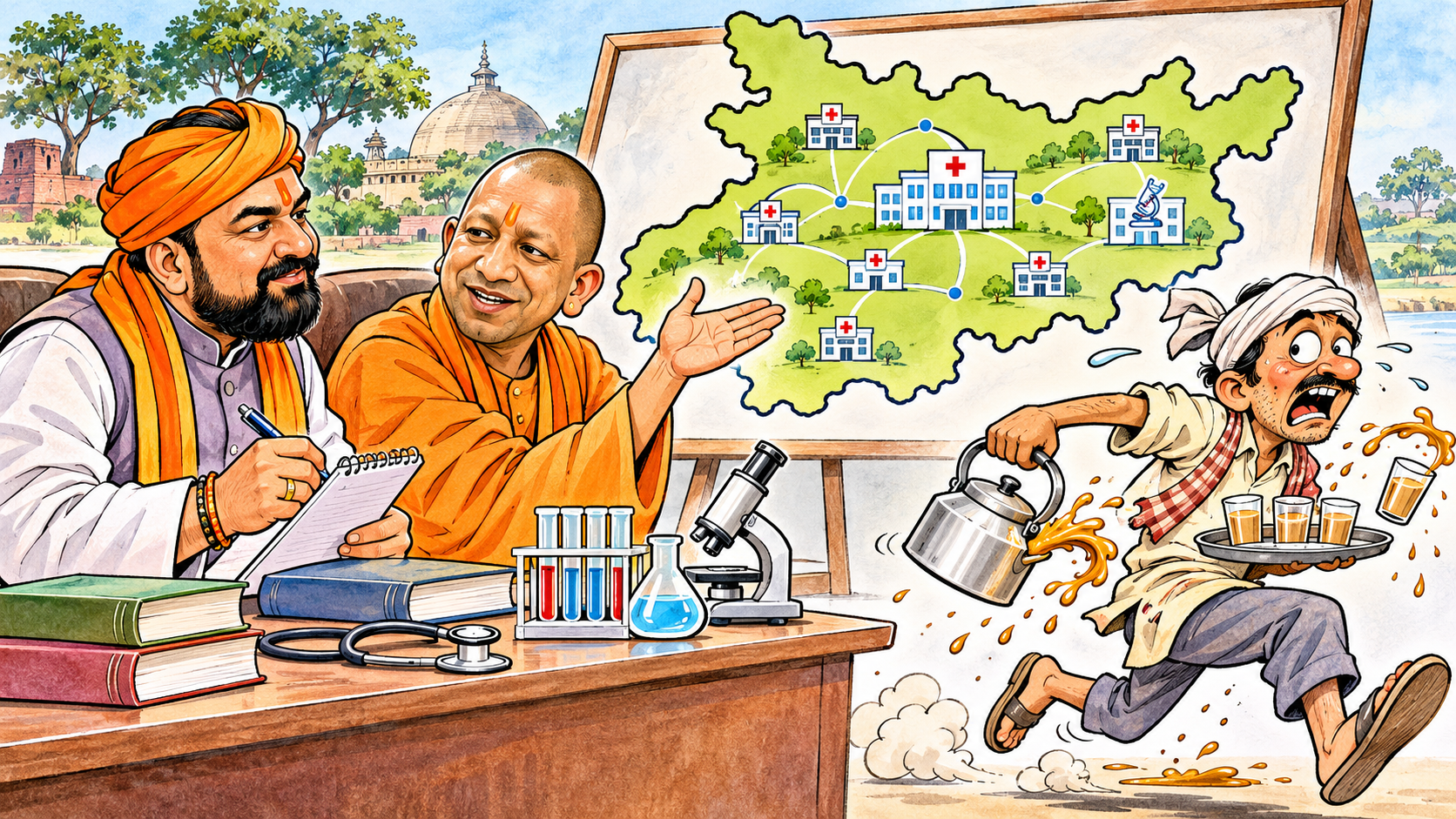
CHAUDHARI SAHAB DEKHA-DEKHI HAR JAGAH CHAI MAT BANWAIYE, PAHLE GHAR KA KONA-KONA MAJBUT KARE
Beyond Prohibition: A Bihar Global Mission for Alcohol-Related Health, Genomics and Recovery
A public-health proposal to the Government of Bihar: strengthen the foundations at home, invite the world’s expertise, and turn a decade of prohibition into a long-term mission for prevention, treatment, research and recovery.
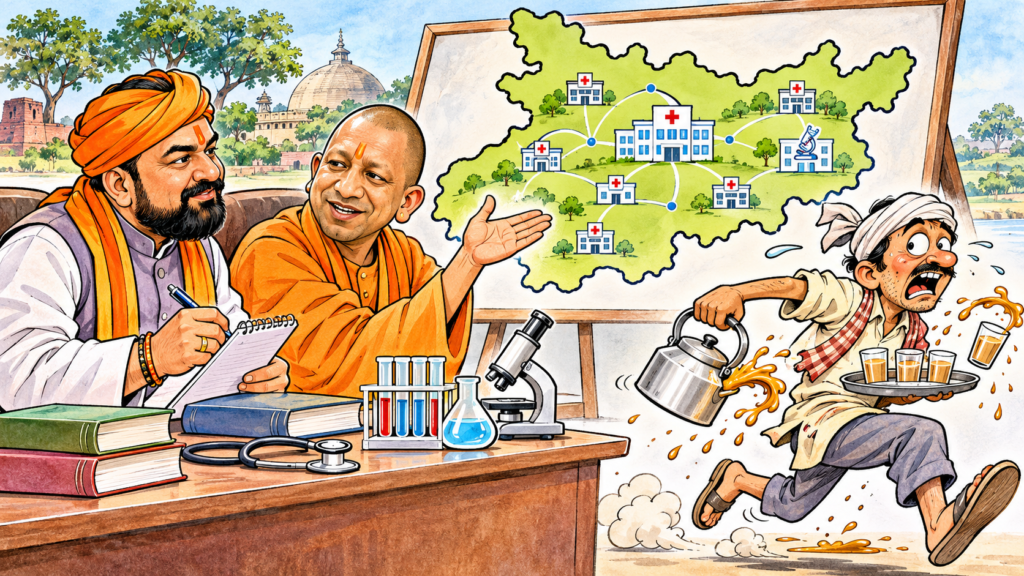
Chief Minister Samrat Choudhary ji, the title is deliberately conversational and provocative: do not copy every visible idea or chase every new announcement before strengthening the foundations at home. Bihar has already undertaken a major policy intervention. The next question is whether it can build an equally serious public-health response around the people who continue to experience alcohol-related harm.
This is not an argument to dilute prohibition, nor a demand that other states or countries adopt Bihar’s liquor policy. It is a proposal for a different next step: make Bihar a centre for prevention, treatment, clinical research and long-term recovery, and invite experts from India and across the world to help build a model that can be independently tested and shared.
A decade after prohibition: what should the next measure of success be?
Bihar prohibited country liquor from 1 April 2016 and declared complete prohibition, including foreign liquor, on 5 April 2016. The state’s own Prohibition and Excise Department records both steps. The tenth anniversary is therefore an important moment to review not only enforcement, but also health outcomes, access to treatment and the condition of families and communities.
The available survey evidence does not support the claim that prohibition changed nothing. In the National Family Health Survey, the proportion of men aged 15–49 in Bihar who reported drinking alcohol fell from 28.9% in NFHS-4 (2015–16) to 17.0% in NFHS-5 (2019–21). These are self-reported survey estimates. They do not, by themselves, tell us how many people have alcohol dependence, how much unrecorded consumption persists, how many people have alcohol-related disease, or whether people who need treatment can obtain it.
That distinction matters. A fall in reported consumption is a meaningful public-health indicator; it is not a substitute for measuring dependence, withdrawal complications, liver disease, mental-health needs, family distress, treatment retention and recovery. Nor can a before-and-after survey alone prove that every change was caused by prohibition. Bihar needs a careful, independent assessment of the decade—not a slogan of total success or total failure.
The next phase: from prohibition to a public-health mission
We propose that the Government of Bihar consider a Bihar Alcohol-Related Health, Genomics and Recovery Mission. Its purpose would be to prevent avoidable harm, make evidence-based care accessible, strengthen research capacity and support people and families affected by alcohol-use disorders. It should be voluntary, confidential, non-punitive and accessible to people regardless of income or location.
The mission should proceed on three connected tracks from the beginning: healthcare and treatment; statewide clinical testing and research infrastructure; and international scientific collaboration. Data collection must not become a reason to postpone care. Treatment services should expand while research protocols and laboratory capacity are being built.
1. Make screening and treatment part of everyday healthcare
Every district should have a clear route from the primary health centre to specialist assessment and treatment. Primary-care teams can use validated screening tools, such as the WHO-recommended AUDIT questionnaire, to identify people who may benefit from brief intervention or specialist care. India’s ICMR Standard Treatment Workflow for Alcohol Use Disorders already sets out screening, assessment, investigation, withdrawal management and relapse-prevention pathways.
The care pathway should include clinical assessment, medically supervised withdrawal where necessary, nutritional evaluation, mental-health support, counselling, family support and clinician-prescribed medicines when appropriate. People at risk of severe withdrawal need urgent medical assessment; abruptly stopping alcohol without medical advice can be dangerous for someone with significant dependence. Follow-up should be regular and personalised: some people may need close weekly contact during early recovery, while others may need less frequent reviews over a longer period.
Healthcare must not become surveillance. No person should be publicly labelled, denied ordinary services, or forced into genetic testing. Confidentiality and dignity are central to the mission.
2. Build a statewide testing and research network
Bihar should map and strengthen existing facilities before creating duplicate institutions. Primary health centres can provide initial screening and referral; district hospitals can undertake routine clinical assessment; medical colleges and regional laboratories can provide specialist testing; and a state reference centre can coordinate quality assurance, advanced research and secure data governance.
Clinical testing should be guided by a person’s symptoms and medical needs. Depending on the assessment, this may include liver function, blood counts, blood glucose, electrolytes, nutritional status and evaluation of neurological or mental-health complications. The research network could also develop carefully governed adult research cohorts, sample collection protocols and a biobank, subject to ethics approval and informed consent.
The goal is not to test every resident for every possible condition. It is to ensure that people receive the right tests at the right level of care, while researchers generate reliable evidence about the burden of disease, treatment outcomes and unmet needs across rural and urban Bihar.
3. Study genetic vulnerability—without treating genes as destiny
Alcohol-use disorder is a complex condition. Many genes, brain pathways, stress responses, mental-health conditions, drinking history and social circumstances contribute to risk. The US National Institute on Alcohol Abuse and Alcoholism describes genetic factors as accounting for roughly half of a person’s vulnerability, while emphasising that many genes and environmental influences are involved.
Variants in genes involved in alcohol metabolism, including ADH1B and ALDH2, are among the established areas of research. They influence how the body processes ethanol and acetaldehyde. They are not, however, a single genetic defect responsible for addiction, and they do not provide a simple genetic cure. Bihar should study the relevance of these and other variants in its own population rather than assume that findings from another population apply unchanged.
Genetic research should initially involve consenting adults under independent scientific and ethics oversight. Testing must be voluntary, accompanied by qualified genetic counselling where appropriate, and protected by strict confidentiality. Results should not be used for employment decisions, insurance discrimination, policing or denial of public services.
Children deserve protection—not predictive labels
The mission should include child health, prevention, nutrition, mental-health support and help for families affected by alcohol-related harm. But it should not introduce routine school-based genetic screening to predict whether a child may develop alcohol dependence as an adult. The ICMR ethical guidelines caution against screening children for late-onset conditions when there is no suitable childhood intervention. A family history can guide supportive care and prevention without turning a child into a genetic risk label.
Genetic testing in a child should be considered only when there is a clear clinical indication and a meaningful benefit during childhood, with appropriate parental consent, the child’s age-appropriate participation and independent ethics safeguards.
4. Bring Ayurveda into research—with scientific safeguards
Bihar can invite its Ayurveda universities, practitioners, pharmacologists and modern medical institutions to investigate traditional formulations and supportive therapies that may have a role in recovery. Research questions could include craving, sleep, stress, nutritional rehabilitation, quality of life and liver-related outcomes.
But no Ayurvedic formulation should be declared a cure for alcohol dependence or a means of reversing genetic damage without reliable clinical evidence. Products must be standardised and tested for quality, toxicity, dosage and interactions with other medicines. Trials should have appropriate comparison groups, adequate sample sizes, independent ethics approval and transparent publication of results. Traditional treatments must not replace established medical care or delay urgent treatment.
5. Study the pandemic’s after-effects without assuming one uniform story
The COVID-19 period disrupted healthcare, livelihoods, social support and family routines. Its longer-term effects on stress, anxiety, depression, isolation, household finances and access to addiction care deserve careful study in Bihar. The mission should examine whether these pressures affected alcohol-related harm or treatment-seeking in different communities. It should not assume that alcohol consumption rose uniformly among all people during the pandemic; that question requires evidence.
Understanding these after-effects can help the state design services that respond to real conditions rather than relying on general assumptions. It can also identify people whose needs were missed during the pandemic and who may still require support.
6. Invite the world’s expertise to Bihar
The Government of Bihar could establish a Bihar Global Consortium for Alcohol Health, Genomics and Recovery, bringing together ICMR, AIIMS institutions, medical colleges, universities, public-health researchers, geneticists, neuroscientists, psychiatrists, addiction specialists, laboratory scientists, Ayurveda research institutions and responsible private healthcare partners.
The consortium should have a practical mandate: design research protocols; strengthen district-level testing and referral systems; train health workers; evaluate treatment pathways; conduct ethically approved genomic research; test traditional formulations where justified; and publish independently reviewed findings. International experts should be invited not merely for conferences, but to co-design studies, mentor Bihar-based teams and help validate results.
Potential international grants and research partnerships should be pursued through transparent proposals with defined work packages, budgets, ethics approvals and measurable outcomes. Bihar’s decade of policy experience creates a valuable research setting, but funding will depend on the quality of the science, governance and implementation plan—not on the prohibition policy alone.
A six-month launch, followed by a five-to-ten-year research horizon
- Month 1: Constitute an expert steering group; map district treatment facilities, laboratories, staff and existing data.
- Month 2: Select pilot districts and hospitals; prepare clinical, consent, privacy and research protocols; begin international invitations.
- Month 3: Start voluntary screening, referral and treatment improvements while seeking ethics approval for research.
- Month 4: Expand sample collection for approved adult research cohorts and strengthen laboratory quality assurance.
- Month 5: Begin approved genomic and clinical studies; assess proposals for Ayurveda research and independent trials.
- Month 6: Publish a first Bihar Alcohol-Health Status Report, disclose service gaps and set independently evaluated expansion targets.
Six months can establish governance, begin services, select research partners and publish a credible baseline. It cannot prove a treatment model or reverse a decade of health damage. That will require sustained investment, follow-up and independent evaluation over several years.
Measure recovery, not just enforcement
Bihar should publish an annual public report showing how many people were screened, referred and treated; how long they remained in care; whether they could re-enter treatment after relapse; what health outcomes improved; where services remained inaccessible; and how much treatment cost. Data should be reported in aggregate, with privacy protected. An independent evaluator should review the programme and publish both positive and negative findings.
The mission should also examine the effects on families, employment, community wellbeing and the affordability of care. A person seeking treatment should not be made to feel that relapse is a moral failure. Recovery is often a long process, and the health system must be prepared to stay alongside people through it.
A global contribution that does not prescribe another country’s alcohol policy
Different societies will make different decisions about alcohol regulation. Bihar’s proposed contribution need not ask them to copy its law. It can offer something more widely relevant: a tested, transparent and adaptable framework for screening, treatment, rehabilitation, research and family support. Countries with different legal systems can still learn from better ways to reduce harm and improve access to care.
The economic opportunity lies in building medical research, diagnostics, training, rehabilitation, responsible traditional-medicine research and public-health expertise. This is not a proposal to promote alcohol consumption or expand the alcohol market. It is a proposal to develop knowledge and services that protect human health.
The appeal to the Government of Bihar
Chief Minister ji, Bihar has already taken a consequential policy decision. Now let the next chapter be about strengthening the foundations: the health centre in the village, the district hospital, the laboratory, the counsellor, the trained doctor, the research institution and the family that needs support.
Invite the world’s expertise, but build Bihar’s own scientific and clinical capacity. Start treatment now, build the testing network responsibly, study genetic vulnerability without stigmatising children, evaluate traditional medicines honestly and publish the results openly. Do not promise a miracle cure. Promise a serious public-health mission that can be measured.
The next measure of Bihar’s achievement should not be only how effectively it enforces prohibition. It should also be how many people it helps recover, how much preventable disease it reduces, how many families it supports and how much useful knowledge it contributes to the world.
Selected sources and further reading
- Government of Bihar, Prohibition and Excise Department — history of the 2016 prohibition notifications.
- Government of India / Rajya Sabha — NFHS-4 and NFHS-5 state-wise alcohol-use figures.
- ICMR — Standard Treatment Workflow for the Management of Alcohol Use Disorders.
- ICMR — Ethical Guidelines, including human genetics testing and research.
- World Health Organization — SAFER: Brief interventions and treatment.
- US National Institute on Alcohol Abuse and Alcoholism — Genetics and Alcohol Use Disorder.
Editorial note: This is a public-policy proposal, not medical advice or a claim that a genetic test or traditional medicine can cure alcohol dependence. Any programme should follow applicable Indian law, ICMR ethics guidance, clinical standards and independent evaluation.