Drastic Educational Changes and the Generational Gap: Why India Needs a Dedicated Institutional Setup to Remain India
Why India must build new learning environments beyond conventional schools to prepare its next generation for an AI-driven world.
The pace of change in the world is accelerating beyond what conventional educational institutions were designed to anticipate. Changes introduced in earlier decades are now producing consequences that are becoming increasingly visible, while new technological developments are creating possibilities that were difficult to imagine even a few years ago.
India is approaching a critical moment. The question is no longer simply whether our education system can provide access to education, deliver established knowledge or prepare students for existing professions. The more important question is whether our institutions can prepare the coming generations to understand, participate in and shape a world that is changing at an unprecedented pace.
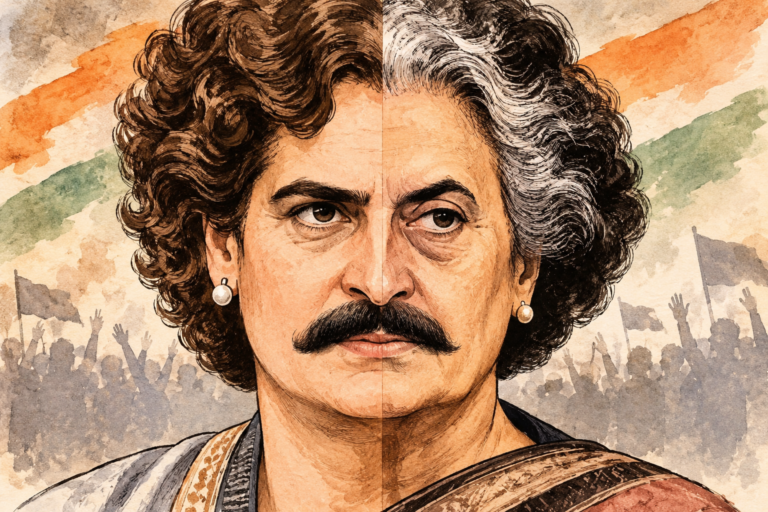
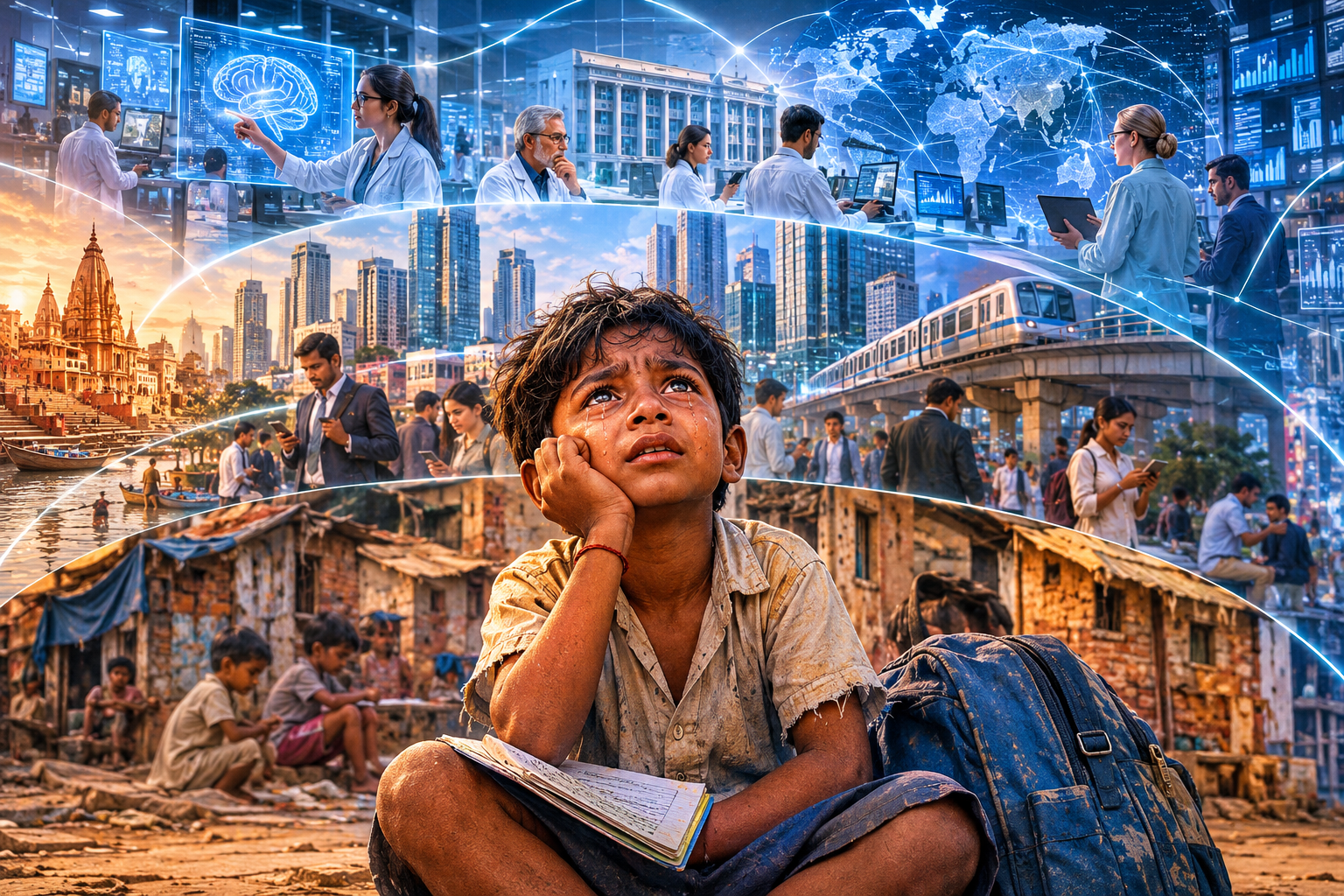
The generational gap is no longer limited to differences in lifestyle, language, social values or professional expectations. It is becoming a gap in the way different generations understand knowledge, technology, human capability and the future itself.
The educational system is facing a different kind of challenge
India has made important policy commitments towards educational transformation. The National Education Policy (NEP) 2020 recognises the need for multidisciplinary learning, critical thinking, creativity, flexibility and the integration of contemporary subjects.
There are also more recent developments. In April 2026, the Central Board of Secondary Education introduced a curriculum framework for Computational Thinking and Artificial Intelligence for Classes III to VIII, beginning in the 2026–27 academic session. Its stated objectives include logical reasoning, problem-solving, pattern recognition, algorithmic thinking and the ethical use of technology. Read CBSE Circular Acad-15/2026.
These are important steps. However, introducing new subjects or adding technology to an existing curriculum does not, by itself, constitute a complete educational transformation.
The challenge is much wider.
The coming generation will need to understand how artificial intelligence works, how decisions are increasingly influenced by data and algorithms, how human beings interact with intelligent systems, and how technological developments may reshape employment, communication, creativity, governance and social relationships.
Students will need more than the ability to operate technology. They will need the capacity to question it, understand its limitations, imagine alternatives and develop solutions of their own.
An education system that primarily measures the ability to reproduce established knowledge will struggle to nurture these capabilities.
When the future becomes visible through a student’s experience
Recent developments in brain-computer interface technology offer a striking illustration of how rapidly the relationship between human thought and machines is changing.
In January 2026, University College London Hospitals reported that seven patients were participating in the UK GB-PRIME study of Neuralink’s brain-computer interface technology. One participant, Sebastian Gomez-Peña, a medical student who had been paralysed following a diving accident, was able to use a computer and mobile phone through the interface. The technology interprets patterns of brain activity associated with intended movement and translates them into digital commands. Read the UCLH report, 29 January 2026.
This is not a claim that human beings can control every aspect of reality merely by thinking. Nor does it mean that such technology is ready for unrestricted use. It remains experimental and is being investigated in a clinical setting.
Nevertheless, the development raises a much larger educational question.
If human intention can increasingly be translated into technological action, what should a student be learning today? How should young people understand the relationship between the human brain, artificial intelligence, machines, creativity and decision-making? What happens when the boundaries between physical action and digitally mediated action continue to change?
These questions cannot remain confined to technology laboratories or specialised research institutions. They must become part of a wider educational conversation.
The future is not simply about teaching children to use the tools that already exist. It is about preparing them to imagine, question and responsibly create tools and systems that do not yet exist.
The missing space for independent thinking and development
One of the most serious concerns is the lack of suitable spaces in which young people can explore ideas beyond the boundaries of formal classroom education.
Schools and colleges remain essential. But they cannot be expected to address every dimension of a rapidly changing society through conventional classroom structures alone.
In many localities, students have limited access to open spaces, laboratories, libraries, creative environments, technology facilities and opportunities for independent experimentation. The problem is not merely the absence of physical infrastructure. It is also the absence of environments where curiosity can develop without being immediately restricted by examination schedules, prescribed answers or conventional measures of achievement.
The infrastructure gap remains significant despite improvements. According to the Government of India’s UDISE+ 2025–26 report, released in July 2026, 67.4% of schools had internet facilities. This represents progress, but it also means that 32.6% of schools did not report internet connectivity. Connectivity alone, moreover, does not guarantee access to computers, quality digital learning resources, trained educators or meaningful opportunities to experiment. Read the Ministry of Education’s UDISE+ 2025–26 release.
This is why the educational challenge must be viewed beyond the conventional school infrastructure model.
India needs more accessible learning environments where students can meet mentors, researchers, technologists, philosophers, artists and practitioners; where they can discuss emerging developments, conduct small experiments, develop projects and learn to connect different areas of knowledge.
Such environments need not all be large institutions. A network of appropriately equipped, locally accessible learning and innovation spaces could complement formal education and provide opportunities that many students currently lack.
India must prepare for change without losing its civilisational identity
There is another dimension to this challenge that is particularly important for India.
Technological development should not require the abandonment of India’s intellectual, philosophical and cultural foundations. Nor should the preservation of tradition become an excuse for resisting new knowledge.
India needs an educational approach capable of bringing these dimensions into meaningful dialogue.
The country’s philosophical traditions have long explored questions concerning consciousness, knowledge, perception, human conduct and the nature of reality. Modern science and technology are examining many different questions about the brain, intelligence, computation and the limits of human capability.
These are not identical fields, and their methods of establishing knowledge must not be confused. But there is considerable scope for serious, disciplined dialogue between them.
The challenge is to develop a generation that can engage with advanced science and technology without losing the ability to think independently about humanity, society, ethics and civilisation.
To remain India, the country must be able to absorb new knowledge, contribute to global developments and retain the intellectual confidence to examine its own traditions critically.
The objective should not be to choose between modernity and heritage. It should be to develop an educational environment in which both can be understood, questioned and meaningfully connected.
The need for a dedicated institutional setup
The developments described above require an institutional response that goes beyond conventional educational administration.
India needs dedicated spaces and networks that can work at the intersection of:
- Artificial intelligence and emerging technologies: understanding AI, computational thinking, human-machine interaction and their social consequences.
- Independent thinking and innovation: encouraging students to question assumptions, develop ideas and turn concepts into practical projects.
- Science and human development: exploring the changing relationship between technology, human capability, health and society.
- Philosophy and consciousness: creating serious opportunities to examine knowledge, perception, awareness, ethics and human experience.
- Cultural and civilisational knowledge: connecting India’s intellectual traditions with contemporary global questions.
- Intergenerational dialogue: bringing students, educators, researchers, practitioners and experienced thinkers into sustained conversation.
Such an institutional setup should not be another examination-oriented structure or a coaching-centre model. Its purpose should be to complement existing education by creating an environment for exploration, interdisciplinary learning, research and independent development.
It should also be accessible beyond major metropolitan centres. If opportunities for future-oriented learning remain concentrated in a limited number of institutions and cities, the generational gap will become an economic and geographical divide as well.
The international dimension and India’s opportunity
The educational transformation now taking place is global. Countries and institutions are developing new approaches to AI literacy, computational thinking, human-machine interaction and interdisciplinary learning.
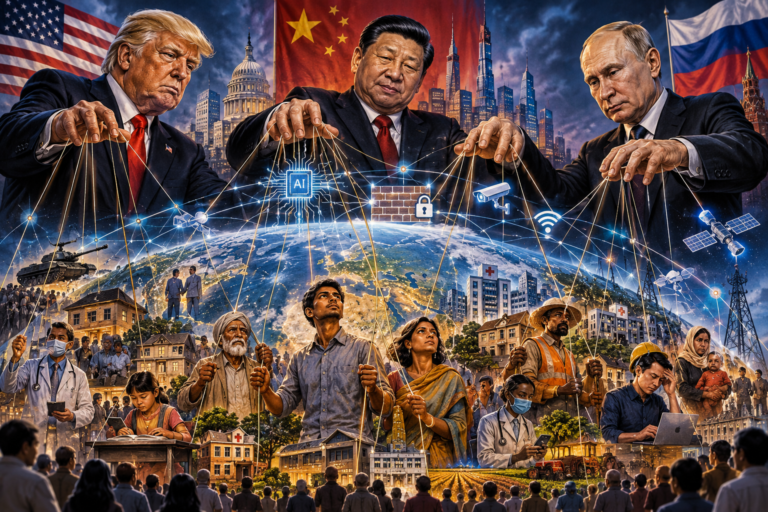
India cannot afford to remain only a consumer of educational models, technological platforms and intellectual frameworks developed elsewhere.
It must also participate in shaping the questions, research directions and institutional approaches that will influence the future of education.
This requires an environment in which Indian initiatives can reach international audiences, establish credible research relationships and contribute to global discussions.
One of the difficulties faced by independent initiatives is that intellectual contribution alone does not guarantee international visibility or institutional recognition. Access to research networks, funding, established platforms, distribution channels and collaborative institutions can determine whether an idea reaches a wider audience.
For initiatives originating outside established international networks, the challenge of gaining visibility and recognition can be considerable.
This should not be interpreted as a lack of ability or intellectual potential in India. It is a structural challenge involving resources, networks, institutional credibility and access to international platforms.
India needs mechanisms that allow serious independent initiatives to develop, demonstrate their work and participate in global knowledge creation.
Tatsat Cosmos: Building an environment beyond conventional boundaries
The Tatsat Cosmos umbrella initiative, through its online knowledge platform and wider institutional vision, is attempting to contribute to this emerging environment.
Its objective is not restricted to publishing information or creating another digital content platform. The broader intention is to encourage an environment in which knowledge, science, wisdom, consciousness, technology, philosophy and human development can be explored together.
The online presence, including Loppla, forms part of the effort to build wider reach and create opportunities for knowledge exchange.
However, the constraints are substantial. Financial limitations, the difficulty of achieving pan-India reach and the uneven distribution of digital visibility make it difficult for independent initiatives to establish the scale of engagement that their ideas may require.
Social and digital platforms have expanded access to information, but visibility is not distributed equally. Established networks, institutional affiliations and financial resources continue to influence which initiatives receive attention and which remain outside wider public and international conversations.
The development of AI-enabled channels creates new possibilities, but it also raises the question of how independent Indian initiatives can participate meaningfully in these emerging knowledge environments.
Tatsat Cosmos has attempted to address this challenge through its work and its wider vision. Yet the development of an initiative with global ambitions requires more than individual effort. It needs an ecosystem of institutional support, research collaboration, financial sustainability and public participation.
A larger question for India
The issue is no longer whether educational change will take place. It is already taking place, through technology, changing patterns of work, new forms of communication and the changing expectations of younger generations.
The real question is whether India will develop the institutional capacity to respond before the gap becomes more difficult to bridge.
A dedicated institutional framework for future-oriented education, independent thinking, technological understanding and civilisational knowledge is not a luxury. It is an emerging necessity.
Such an initiative should encourage children and young people to become more than recipients of information. They should be able to become creators, researchers, questioners and responsible participants in shaping the future.
India must prepare its young generation not simply to fit into a changing world, but to contribute to the direction in which that world develops.
The objective is not to change India into something else. It is to ensure that India remains intellectually alive, culturally confident and technologically capable while the world around it undergoes fundamental transformation.
That is the institutional challenge Tatsat Cosmos seeks to bring into the wider conversation.